

Let’s be honest — the world of investing can feel like an exclusive club. You picture men in suits shouting on a trading floor, or apps with charts that look like a doctor’s worst nightmare. And if you only have, say, $20 to spare? Well, you might assume you’re out of luck. But here’s the deal: that’s just not true anymore. Micro-investing platforms have quietly flipped the script for beginners with small capital.
So if you’ve been sitting on the sidelines, thinking you need thousands to start, this one’s for you. We’re going to walk through what micro-investing actually means, which platforms make sense for tiny budgets, and how to avoid the common traps. No jargon overload. No hype. Just practical stuff.
What Exactly Is Micro-Investing?
Micro-investing is pretty much what it sounds like — investing with very small amounts of money. We’re talking $1, $5, maybe $10 at a time. Instead of needing a lump sum to buy a full share of, say, Apple or Tesla, these platforms let you buy fractional shares. That means you own a slice of the pie, not the whole bakery.
Another common feature? Round-ups. You link your debit or credit card, and every time you buy a coffee for $3.50, the app rounds it up to $4.00 and invests that extra $0.50. It’s painless. Almost sneaky, in a good way.
Honestly, the psychology here is clever. You’re not “investing” in a scary, deliberate way. You’re just… living your life, and spare change quietly grows in the background. Like a plant you forget to water that somehow still thrives.
Why Small Capital Isn’t a Dealbreaker Anymore
Ten years ago, if you had $50 to invest, your options were limited. You’d get eaten alive by trading fees. But today? Competition among fintech apps is fierce. Many platforms have dropped commissions to zero and lowered minimums to nothing.
In fact, according to recent industry data, over 60% of new brokerage accounts in the U.S. are opened with less than $1,000. That’s a massive shift. The barrier to entry has basically crumbled.
That said, small capital does mean you need to be a bit more thoughtful. You won’t get rich overnight. But you can build a habit — and that habit, over years, is where the magic happens.
Top Micro-Investing Platforms Worth a Look
Alright, let’s get specific. Here are some platforms that consistently come up for beginners with tiny budgets. I’ll keep it real about the pros and the annoyances.
1. Acorns
Acorns is probably the poster child for micro-investing. It automatically invests your spare change from purchases into a diversified portfolio of ETFs. You can also set up recurring transfers — $5 a week, for example.
The catch? It costs $3 to $5 per month. If you only have $20 invested, that fee stings. So Acorns makes more sense once you’ve got a few hundred dollars in there. Still, for habit-building, it’s tough to beat.
2. Stash
Stash takes a slightly different angle — it’s more about learning as you go. You pick from curated themes like “Clean & Green” or “Internet Giants.” Minimum to start? Just $5. Monthly fee is $3 (or $9 for the fancier tier).
I’ll be honest: the fees can eat into small returns. But if you treat it as tuition for your financial education, it’s not crazy. Just don’t leave $10 sitting there for a year and wonder why it didn’t grow.
3. Robinhood
Robinhood changed the game with commission-free trading. You can buy fractional shares of stocks and ETFs with as little as $1. No monthly fee. The interface is slick, maybe too slick — it’s easy to get tempted into risky trades.
For beginners, I’d suggest sticking to broad ETFs rather than meme stocks. But the platform itself is legit for small sums.
4. Public
Public is similar to Robinhood but adds a social layer — you can see what others are investing in. It also offers fractional shares and no commissions. There’s even a “theme” feature. The downside? The social aspect can encourage herd behavior. Use it for ideas, not as gospel.
5. M1 Finance
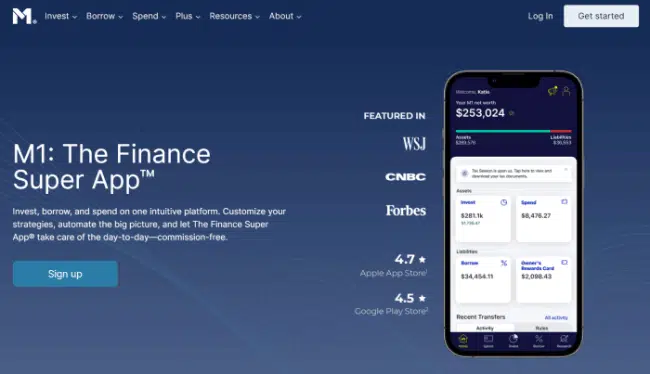
M1 Finance is fantastic for automating a portfolio. You create a “pie” of stocks or ETFs, set your percentages, and deposit whatever you want — even $10. The platform invests it according to your recipe. No trading fees. No minimums.
It’s less about round-ups and more about intentional, recurring investing. If you’re the type who likes to set it and forget it, M1 is a gem.
Quick Comparison Table
| Platform | Minimum | Fees | Best For |
|---|---|---|---|
| Acorns | $0 to start | $3–$5/month | Round-ups & automation |
| Stash | $5 | $3–$9/month | Learning + thematic investing |
| Robinhood | $1 | $0 commissions | Fractional stocks, no fees |
| Public | $1 | $0 commissions | Social investing |
| M1 Finance | $10 (no min) | $0 commissions | Custom portfolios, automation |
Watch Out for These Pitfalls
Micro-investing isn’t perfect. Here are a few things I wish someone had told me earlier.
- Monthly fees can crush small balances. If you have $50 and pay $3/month, that’s 6% annually — brutal. Wait until you have a few hundred before using fee-based apps.
- Round-ups are slow. Investing $0.50 at a time feels good, but it won’t build serious wealth alone. Pair it with recurring deposits.
- Over-diversification. Some apps push you into dozens of tiny positions. That’s not diversification; it’s clutter. Stick to broad ETFs.
- Taxes. Selling investments can trigger taxes, even small gains. Keep records. Or use a Roth IRA if you’re in the U.S.
And please — don’t check your portfolio every hour. You’ll drive yourself nuts. Micro-investing is a marathon, not a sprint. Or maybe a leisurely walk. With snacks.
How to Start With Just $10 (or Less)
Here’s a simple roadmap. No fluff.
- Pick a platform with no monthly fee. Robinhood, Public, or M1 Finance are good starting points.
- Open an account. It takes about 10 minutes. You’ll need your ID and maybe a selfie.
- Deposit what you can afford to lose. Seriously — only money you won’t need for rent or groceries.
- Buy a broad ETF. Something like VTI or SPY. It’s like buying a basket of the whole market instead of betting on one egg.
- Set a recurring deposit. Even $5 a week. Automate it. Then forget it.
- Wait. And keep waiting. Check in quarterly, not daily.
That’s it. Boring? Maybe. Effective? Absolutely.
The Real Secret: Consistency Over Amount
I’ll leave you with this thought. The biggest predictor of investment success isn’t how much you start with. It’s how long you stay in the game. A person who invests $20 a month for 30 years will likely crush someone who invests $5,000 once and then panic-sells during a dip.
Micro-investing platforms lower the barrier so you can start small, sure. But their real gift is they make consistency easy. Round-ups, auto-deposits, fractional shares — all these little nudges keep you moving forward.
So don’t wait until you have “enough” money. There’s no such thing. Start with what you have. Learn as you go. Adjust. And let time do the heavy lifting. That’s not a sales pitch — it’s just math.